• Husqvarna Motorcycles Made In Sweden - About 1988 and older

  • Hi everyone,

    As you all know, Coffee (Dean) passed away a couple of years ago. I am Dean's ex-wife's husband and happen to have spent my career in tech. Over the years, I occasionally helped Dean with various tech issues.

    When he passed, I worked with his kids to gather the necessary credentials to keep this site running. Since then (and for however long they worked with Coffee), Woodschick and Dirtdame have been maintaining the site and covering the costs. Without their hard work and financial support, CafeHusky would have been lost.

    Over the past couple of weeks, I’ve been working to migrate the site to a free cloud compute instance so that Woodschick and Dirtdame no longer have to fund it. At the same time, I’ve updated the site to a current version of XenForo (the discussion software it runs on). The previous version was outdated and no longer supported.

    Unfortunately, the new software version doesn’t support importing the old site’s styles, so for now, you’ll see the XenForo default style. This may change over time.

    Coffee didn’t document the work he did on the site, so I’ve been digging through the old setup to understand how everything was running. There may still be things I’ve missed. One known issue is that email functionality is not yet working on the new site, but I hope to resolve this over time.

    Thanks for your patience and support!

rod side clearance

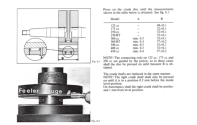
Minimum is .5mm (.0196"). If you check the overall width of the crank web is 52.0mm +/- .1mm (2.047" +/- .004"). There is no maximum given ! I have never had a 390 rod that has side wear. The wear point is always the big end and small end.
 
Remember that that on the Husqvarnas in this section the rods are centered within the piston. They are known as piston driven because the big end of the conn rod floats between the crank cheeks.
 
Don't forget the rod is centered by the two thrust washers on the wrist pin. The big end floats freely.
 
I know this is an old thread but here goes..

I’m putting a new Vintco piston in my 1980 390WR after having the cylinder bored and honed. I called Vintco and they said spacers/ washers on either side of the wrist pin bearing are not necessary. Can someone with more experience than me confirm this? I am a little concerned that spacers/ washers will restrict lubrication to the wrist pin bearing.

Thanks in advance for any guidance.
 
I can't say that I have more experience but if the HVA engineers felt spacing rings were needed then they probably should be used. As far as blocking oil flow, many Husky models used them decades prior to 1980 with no problems.
 
I put them on all that the parts list list them on. But ....
that is with the Mahle pistons
others like Vintco, SeizeCo :p or the others I have no Idea.
If it came apart with them I will add them no matter the piston maker. Am I a knucklehead. Sure
But extra parts on the bench are a NO NO!!:oldman:
 
I have had this issue with mine in the past. Check your new piston. Measure the small end gap between the bosses. You will probably find that it is narrower than the o.e. piston. There was not room for the alloy spacers in mine.
I used a Kawasaki small end bearing that is slightly wider than the husky one. It gives the same gap as if you had used the spacers. I like this idea as it exposes the ends of the needle rollers to a bit more oil mist.
Both my 390's have run these bearings for many years without any issue.
Do your measuring and see what fits.
 
I think the Kawasaki bearing I used was 13033-1010
This is the 18mm i.d. x 22mm o.d. x 24mm long bearing. Very cheap and readily available.
I think a long bearing is a good way to go. The 70's 450 Husky uses a small end bearing thats xtra long thus eliminating the need for additional spacers.
 
For the piston-centered engines, it's not the large or the small end bearing that keeps the rod centered. It's the spacers at the small end and the resulting rod side clearance up there. If an aftermarket piston is made narrower (essentially, having the spacers incorporated into the piston material itself), then it may not need the spacers. There is nothing wrong with doing it that way, as long as ALL the pieces fit into that method of assembly. You do need a bearing (at both ends) that floats a little inside the available width. Whether your particular piston requires a little wider or narrower bearing you will have to determine.

No matter how you end up assembling it for your particular piston, the side-to-side movement of the rod should be set by the small end not the large end. As you probably noticed during inspection, the crank end of the rod has HUGE side clearance, and this is why... it should never touch. This is also why Husky only publishes an overall width across the crank wheels, and often does not specify a true "rod side clearance" at the large end on these models.
 
Last edited:
No matter how you end up assembling it for your particular piston, the side-to-side movement of the rod should be set by the small end not the large end. As you probably noticed during inspection, the crank end of the rod has HUGE side clearance, and this is why... it should never touch. This is also why Husky only publishes an overall width across the crank wheels, and often does not specify a true "rod side clearance" at the large end on these models.

HVA Shop Manual
Picture1.png
 
Back
Top
